How to Insulate Your Garage for Energy Savings: What I Wish I'd Known Before Spending $1,200
My garage used to be a frozen wasteland from November through March, so cold that my car battery died twice and I couldn’t use my workshop for half the year. Last winter, I finally decided to tackle garage insulation after watching my neighbor transform his into a year-round woodworking shop. What started as a weekend project turned into a three-week education in thermal dynamics, air sealing, and why most garage insulation jobs fail spectacularly. The good news? My garage is now comfortable enough to work in during January, and my heating bills dropped by about $40 per month once I stopped heating the great outdoors through my garage walls.

The biggest revelation wasn’t about insulation materials or R-values — it was discovering that most attached garages are giant energy vampires that suck conditioned air right out of your house. That shared wall between your garage and living space is often the least insulated surface in your entire home, and if your garage gets brutally cold, it’s pulling heat through that wall like a thermal black hole. After properly insulating my garage and air-sealing the connections, the difference wasn’t just comfort — it was a measurable reduction in how hard my furnace had to work to keep the house warm.
Why Most Garage Insulation Projects Fail Before They Start
The fundamental problem with garage insulation isn’t the materials or installation technique — it’s that most people treat garages like they’re just another room in the house. Garages have unique challenges that make standard insulation approaches completely ineffective, and I learned this the expensive way during my first attempt. I spent $600 on fiberglass batts and carefully installed them between every stud and joist, following the same approach I’d used successfully in my basement. The garage felt slightly less arctic, but it was still uncomfortably cold, and I couldn’t figure out why until I started thinking about how garages actually function.
Unlike interior rooms, garages have massive air exchange with the outside through the overhead door, which means traditional insulation strategies don’t work the same way. Every time you open that door, you’re essentially replacing all the air in the space with outside air, which means you’re not trying to maintain a steady temperature — you’re trying to help the space recover quickly from temperature shocks. This realization completely changed my approach to garage insulation and led me to focus on thermal mass and radiant barriers rather than just stuffing cavities with fluffy material.
The other major issue is that most garages have concrete floors that act like giant heat sinks, constantly pulling warmth out of the air and radiating cold upward. I noticed this effect most dramatically on sunny winter days when the air temperature in my garage would climb into the 50s, but the concrete floor remained brutally cold to the touch. Standing on that floor for more than a few minutes would chill you to the bone, regardless of air temperature. This taught me that effective garage insulation requires a multi-layered approach that addresses walls, ceiling, and floor thermal bridging, not just the obvious cavities between studs.
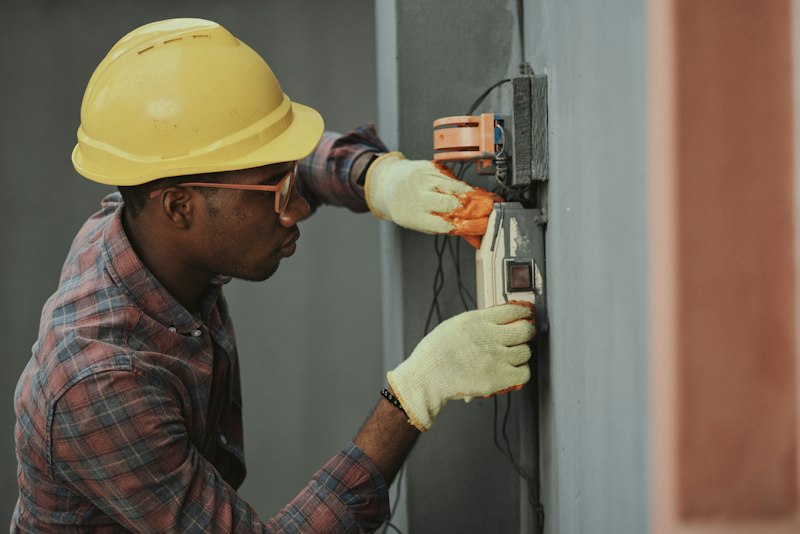
Most garages are thermal disasters with uninsulated walls, massive air leaks, and concrete floors that act like giant heat sinks

The Right Way to Approach DIY Insulation in Your Garage
After my initial failure, I completely rethought my garage insulation strategy and focused on creating a thermal envelope that could handle the unique demands of garage use. The key insight was treating the garage as a semi-conditioned space rather than trying to make it as tight as an interior room. This meant prioritizing insulation that would help the space recover quickly from temperature swings while preventing the worst heat loss to the outside and into the house.
I started with air sealing, which turned out to be far more important than I’d initially realized. The gaps around my garage door were obvious, but I found dozens of smaller air leaks that were collectively massive — gaps where the bottom plate met the concrete, holes where electrical conduit entered the walls, and a particularly egregious gap where the drywall installer had left a two-inch space behind the water heater. I used expanding foam for the smaller gaps and weatherstripping for the larger ones, paying special attention to the shared wall with the house where air leaks would directly impact my heating costs.
For the actual insulation, I ended up using a combination approach that addressed different thermal challenges. In the walls, I installed rigid foam boards directly against the studs, which eliminated thermal bridging and created a continuous insulation layer. This was more expensive than fiberglass batts, but it performed dramatically better because it didn’t rely on trapped air that could be displaced by air movement. In the ceiling, I used blown-in cellulose because the space above my garage was essentially an unconditioned attic, and loose-fill insulation could conform to all the irregular spaces around ductwork and electrical runs.
The floor situation required the most creative thinking because I wasn’t about to tear up a perfectly good concrete slab. Instead, I focused on breaking the thermal connection between the floor and my feet by installing interlocking foam tiles in my primary work areas. This wasn’t technically insulation, but it eliminated the miserable experience of standing on freezing concrete and made the garage feel dramatically warmer even when the air temperature was the same. For areas where I needed to roll heavy equipment, I used thick rubber mats that provided some thermal break without creating trip hazards.
Understanding the Economics of Garage Energy Savings
The financial case for garage insulation isn’t as straightforward as other home improvement projects because the energy savings depend heavily on your specific situation and how you use the space. If you have an attached garage with a shared wall to your living space, the potential savings are substantial because you’re essentially plugging a major thermal leak in your home’s envelope. If your garage is detached or you never heat it, the economics shift toward comfort and usability rather than direct energy savings.
In my case, the shared wall between my garage and house was the shift for energy costs. Before insulation, that wall was essentially an exterior wall with interior-grade insulation, which meant my furnace was working overtime to compensate for heat loss through the garage. After properly insulating the garage and air-sealing the connections, I noticed the difference immediately in how often my furnace cycled and how evenly the house maintained temperature. The $40 monthly savings I mentioned earlier came primarily from reducing the thermal load on my main heating system, not from heating the garage itself.
The comfort benefits were actually more valuable than the direct energy savings, though they’re harder to quantify. Having a usable garage during winter months meant I could do maintenance projects year-round, store temperature-sensitive items without worry, and actually use my car remote starter effectively because the engine wasn’t starting in sub-zero conditions. I calculated that the insulation project paid for itself in about three years through energy savings alone, but the quality-of-life improvements made it worthwhile regardless of the financial return.
One unexpected benefit was that proper garage insulation made my house quieter by reducing sound transmission through the shared wall. I hadn’t realized how much noise was traveling from the garage into the house until it stopped — everything from the garage door opener to power tools became much less intrusive. This acoustic improvement was particularly noticeable in the bedroom that shares a wall with the garage, where my wife had complained about early morning garage door noise for years.

Advanced Techniques That Make the Biggest Difference
After completing the basic insulation work, I discovered several advanced techniques that dramatically improved performance without adding much cost or complexity. The most impactful was installing a radiant barrier on the garage door itself, which addressed the single largest source of heat loss in most garages. I used reflective insulation panels designed specifically for garage doors, and the difference was immediately noticeable — the door went from being painfully cold to the touch to merely cool, and the garage maintained temperature much more effectively.
The second shift was addressing thermal bridging through the wall studs, which I’d completely ignored in my first attempt. Even with insulation between the studs, the wooden framing members themselves conduct heat directly from inside to outside, creating cold spots and reducing overall thermal performance. I solved this by installing a continuous layer of rigid foam over the entire wall surface before adding drywall, which broke the thermal bridge and created a much more effective thermal envelope.
Ventilation turned out to be more important than I’d expected, particularly for managing moisture and maintaining air quality. I installed a small exhaust fan on a timer that runs for 15 minutes every few hours, which prevents condensation buildup without creating major air exchange that would defeat the insulation. This was especially important because my newly tight garage could trap moisture from wet cars and create humidity problems that would damage stored items and potentially cause mold issues.
The final piece was strategic heating, which I approached completely differently after understanding how garages actually behave thermally. Instead of trying to maintain a constant temperature like an interior room, I installed a small electric heater on a programmable thermostat that brings the space up to a comfortable working temperature only when needed. This approach works because the improved insulation allows the garage to reach comfortable temperatures quickly and maintain them efficiently, rather than fighting a losing battle against constant heat loss.
Looking back on this project, the most important lesson was that garage insulation requires a systems approach rather than just adding insulation material. The air sealing, thermal bridging elimination, and moisture management were all equally important to the final result, and skipping any of these elements would have significantly compromised performance. The $1,200 I spent on materials and the three weekends of work transformed an unusable space into a comfortable workshop while reducing my heating costs and making my entire house more comfortable. The key was understanding that garages aren’t just unfinished rooms — they’re unique spaces that require specialized approaches to achieve real energy savings and comfort improvements.